Sunscreen Manufacturers in India: A Practical Guide for Brands and Clinics
By Admin · Jun 30, 2026
Sunscreen has evolved from a seasonal skincare product into a daily dermatology essential in India, driven by high UV exposure and rising awareness of pigmentation, acne care, and photo-ageing. For pharmaceutical distributors, clinics, and emerging skincare brands, this shift has created a significant business opportunity in the dermatology segment, particularly for those partnering with the right sunscreen manufacturing partner.
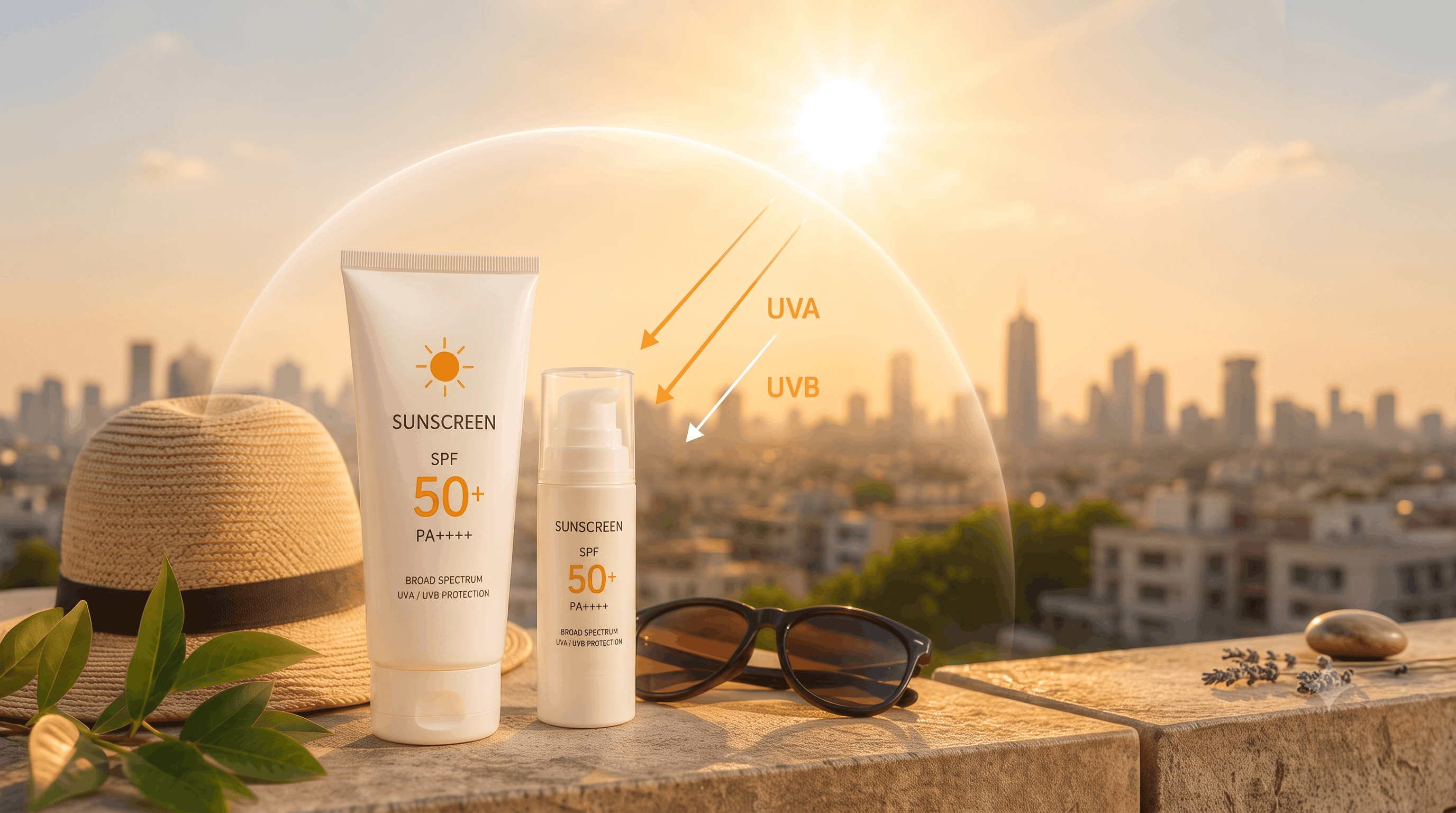
India experiences high UV index exposure across most regions, which is one of the key reasons dermatologists now recommend daily SPF use more aggressively than ever before.
Why Sunscreen Demand Has Shifted in India
A few years ago, sunscreen was mostly bought before a beach holiday or a wedding shoot. That pattern has changed. Dermatologists now recommend daily SPF as part of routine skincare, especially for patients managing pigmentation, melasma, acne scarring, or post-procedure skin care. Pollution, longer screen exposure, and growing awareness about long term sun damage have all pushed sunscreen into a year-round category rather than a summer one.
India records some of the highest UV index exposure levels globally, which has significantly increased the risk of pigmentation, sun damage, and premature ageing across all skin types.
This demand is not limited to metro cities anymore. Tier 2 and tier 3 cities are seeing steady growth in dermatology visits and skincare spending, with working professionals, students, and older patients managing chronic skin conditions all becoming part of the regular SPF buying audience. For pharma distribution companies, this means the market for a dependable dermatology sunscreen manufacturer in India is wider and steadier than before, and it stays active through most of the year rather than spiking only in summer.
This is good news for clinics and pharmacies that already stock dermatology and skincare ranges. Adding a properly formulated sunscreen fits naturally alongside anti-pigmentation creams, acne treatments, and post treatment skin care products that patients are already buying.
What to Check Before Choosing a Sunscreen Manufacturer in India
Not every manufacturer that claims to make sunscreen actually has the formulation expertise to do it well. Sunscreen is chemically more sensitive than a regular moisturizer or cream, so a few things deserve real attention before you commit to a bulk sunscreen supplier in India.
Broad Spectrum Protection
An SPF 50 manufacturing company in India should be able to show you UVA and UVB protection data, not just an SPF number on paper. UVB causes sunburn, but UVA is what drives long-term pigmentation and skin ageing, so both need to be addressed properly in the formulation.
Texture and Skin Type Options
India has a wide range of climates and skin types, so a one-size-fits-all sunscreen rarely works well for everyone. A capable sunscreen manufacturing company in India will usually offer a gel-based option for oily and acne-prone skin, a cream-based option for dry skin, and sometimes a tinted or matte finish version for patients who want cosmetic coverage along with protection.
Stability and Shelf Life
Sunscreen formulations can break down faster than other skincare products if they are not stored or packaged correctly. Ask your supplier for stability testing data and shelf-life validation, which matters even more in India, given how products travel across very different climate zones before reaching a clinic or pharmacy shelf.
Certifications That Actually Matter
WHO GMP and ISO certification should be the baseline, not a bonus. If the product is being positioned as a dermatology sunscreen rather than a pure cosmetic item, proper documentation and regulatory compliance become even more important, especially for distributors supplying clinics and hospitals.
Packaging That Protects the Formula
Sunscreen oxidizes faster when exposed to light and air, so packaging is not just a branding decision; it directly affects how well the product performs. A dependable cosmetic sunscreen third-party manufacturer in India will guide you on tube or bottle materials that protect the formulation through storage and transport.
How Third-Party Manufacturing for Sunscreen Works
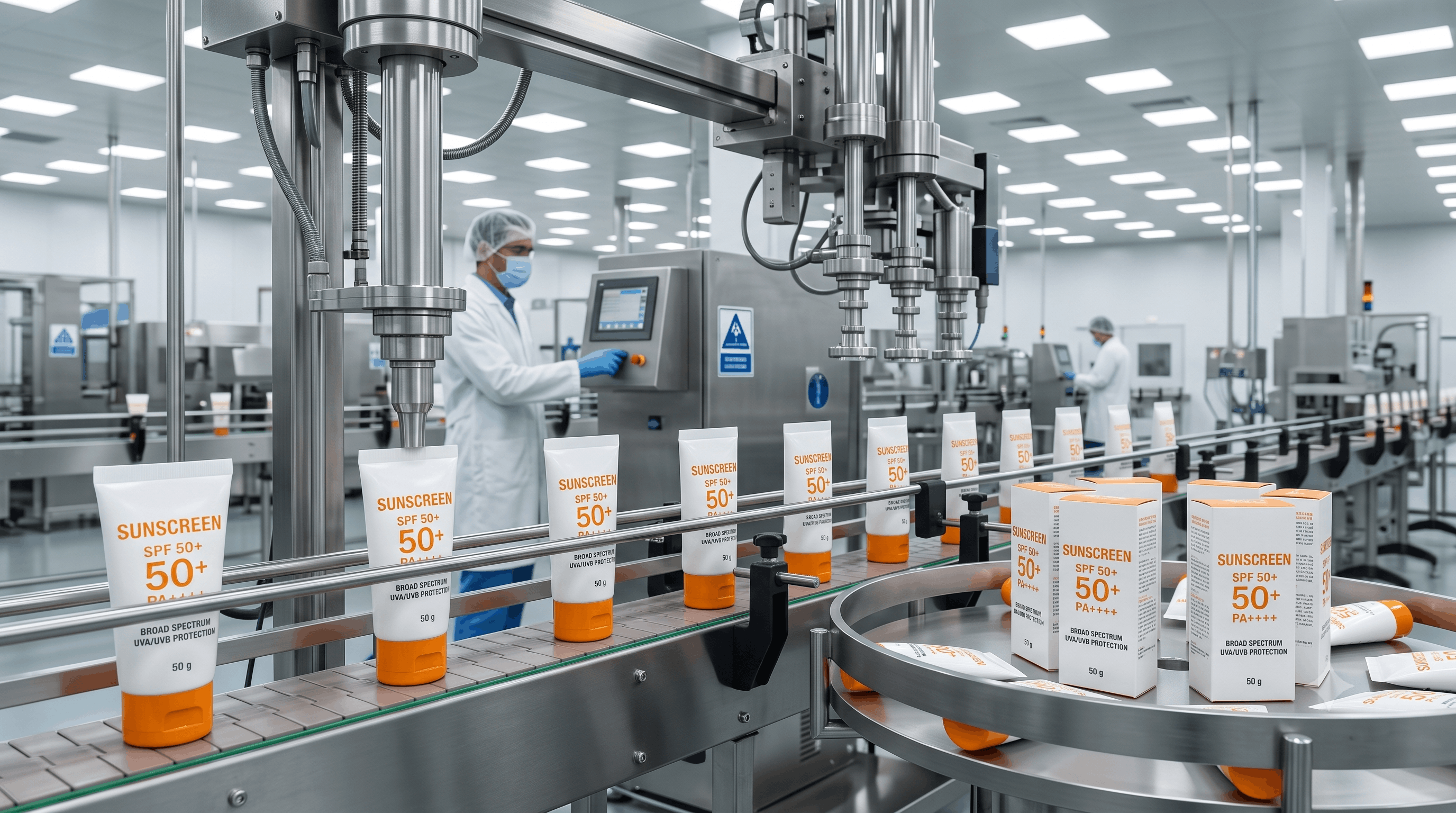
Third-party manufacturing allows a brand or distributor to launch a sunscreen product under its own label without owning a manufacturing setup. The process is fairly straightforward once you understand the steps involved.
It usually begins with formulation selection, where you either choose from the manufacturer's existing SPF formulations or request a custom version based on a specific skin concern, such as oil control, sensitive skin, or a tinted finish. After that comes sampling, where the manufacturer shares trial batches so you can test texture, fragrance, and how the product performs before committing to bulk production.
Once the formulation is approved, branding and packaging come into the picture. Private label sunscreen manufacturers typically handle bottle or tube design, labelling, and carton packaging based on what the brand provides. From there, the product moves into bulk production, where batch testing is done for SPF efficacy, stability, and microbial safety before the final stock is dispatched to the distributor or clinic network.
This model works particularly well for dermatology clinics, regional distributors, and derma PCD sunscreen range partners who want to enter the sunscreen category without the heavy capital investment that comes with setting up an in-house manufacturing facility.
What a Good Sunscreen Manufacturer Should Offer
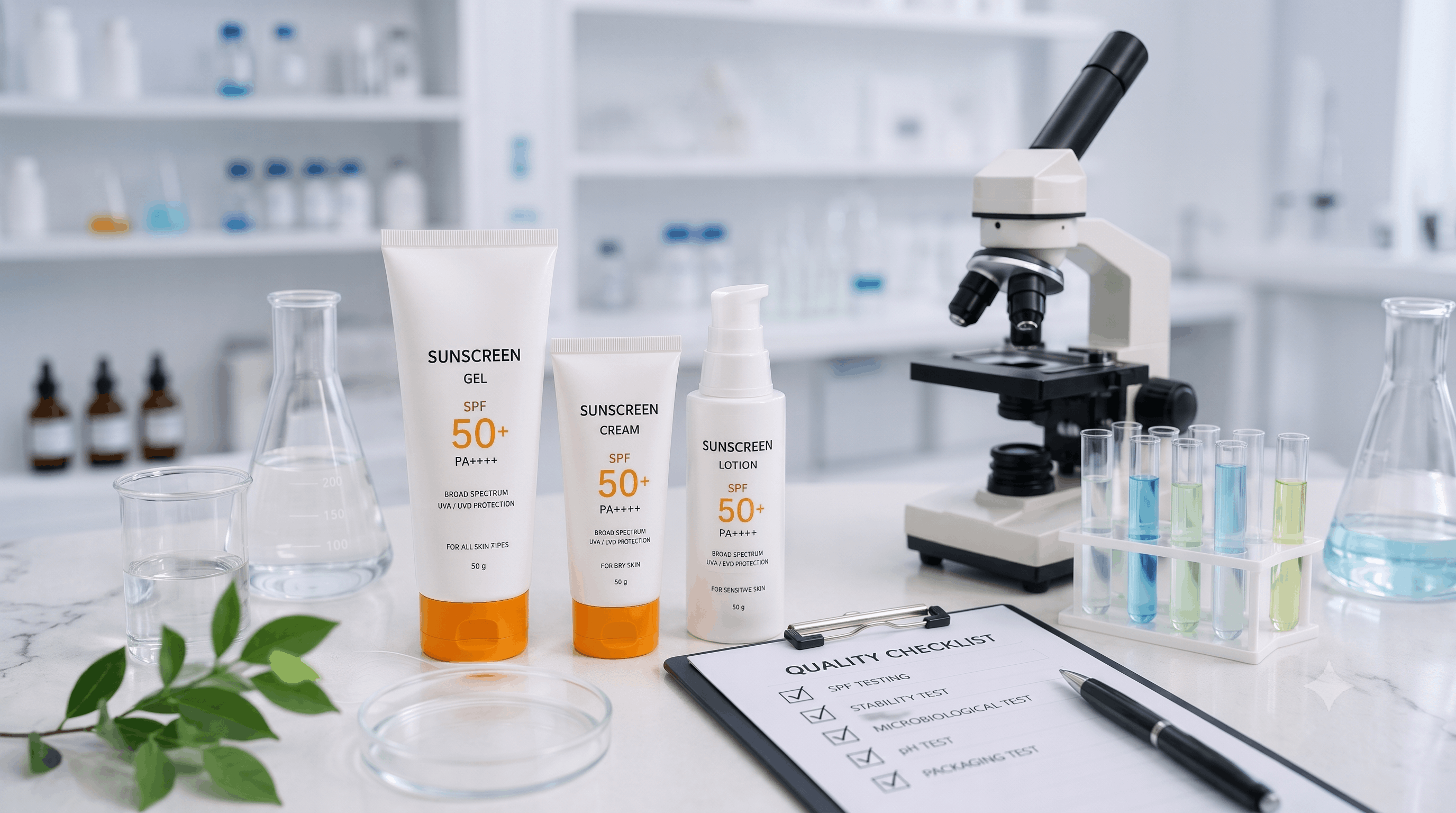
Buyers often focus only on price and packaging, but the manufacturing partner you choose should bring more to the table than just production capacity. A genuinely capable partner should offer SPF testing support so you are not guessing about efficacy claims, proper regulatory documentation so your product is compliant, whether it is positioned as cosmetic or dermatological, and custom formulation capability so the product can actually be adapted to your target skin concern instead of being a generic base formula with your label on it.
Dermatology-grade base ingredients matter as well, particularly if your buyers are clinics and dermatologists who will ask questions about the formulation before recommending it to patients. At Indigammy, we work with manufacturing partners and distribution networks to support clinics and brands in sourcing dermatology-grade formulation guidance so that clinics and pharmacies can trust the product they are putting in front of patients.
Common Mistakes Brands Make When Choosing a Sunscreen Manufacturer
Many new skincare brands and distributors focus only on pricing and packaging when selecting a sunscreen manufacturer. This often leads to issues later in product performance and market acceptance.
One of the most common mistakes is choosing a supplier without verifying SPF testing and stability data, which can directly impact product credibility in dermatology recommendations. Another frequent issue is ignoring formulation flexibility, which limits the ability to create products suited for different skin types, such as oily, dry, or sensitive skin.
Brands also often overlook regulatory clarity, assuming that cosmetic and dermatology positioning follow the same documentation requirements. This can create compliance issues during distribution, especially when supplying clinics and pharmacies.
Finally, many businesses underestimate the importance of packaging quality, even though sunscreen stability is highly dependent on protection from light and air exposure.
Private Label Sunscreen: What to Clarify Before You Commit
If you are exploring private label sunscreen manufacturers, a few practical questions are worth asking upfront rather than after production has already started.
Minimum order quantity is usually the first thing to clarify, since it varies a lot between manufacturers and needs to match your realistic sales volume rather than what sounds impressive on paper. It also helps to ask whether the formulation will be exclusive to your brand or shared across other clients using the same base formula, since this affects how differentiated your product actually is in the market.
Regulatory documentation is another area that gets overlooked. A sunscreen sold purely as a cosmetic item may need different paperwork compared to one being marketed with therapeutic or dermatological claims, so it is worth confirming this early with your manufacturer rather than assuming it will sort itself out later.
Turnaround time matters too. While sunscreen demand has become less seasonal than before, there are still periods of higher buying activity, and a manufacturer who cannot meet your delivery timelines during those windows can end up costing you sales rather than helping you grow.
Why This Category Fits Naturally Into Dermatology Distribution
For pharma distributors already supplying dermatology clinics and pharmacies, sunscreen is one of the easiest categories to add without disrupting an existing product range. It pairs naturally with pigmentation treatments, acne care, and post-procedure skin recovery products that dermatologists are already prescribing to the same patients. A manufacturer who understands both the pharmaceutical compliance side and the cosmetic formulation side gives distributors more flexibility in how the product is positioned, whether that is through clinic dispensing, pharmacy retail, or wholesale supply to other businesses.
If you are planning to launch a private label sunscreen or expand your dermatology product range, Indigammy can support you with formulation development, WHO-GMP certified manufacturing, and reliable bulk supply across India. Connect with our team to discuss your requirements and build a product that is ready for clinic and pharmacy distribution.
Final Thoughts
Sunscreen has quietly become one of the most consistent growth categories within dermatology and skincare distribution in India. The manufacturers who combine real formulation expertise, proper certification, and reliable dispatch timelines are the ones who will be trusted long term by clinics, pharmacies, and distributors alike. Whether you are looking into third-party manufacturing, exploring a private label sunscreen line, or simply searching for a dependable SPF 50 sunscreen supplier in India for your existing business, the right manufacturing partner can make the difference between a product that sells once and one that earns repeat orders.