Why Indigammy's Dual Model Gives Franchise Partners More Flexibility
By Admin · Sep 18, 2026
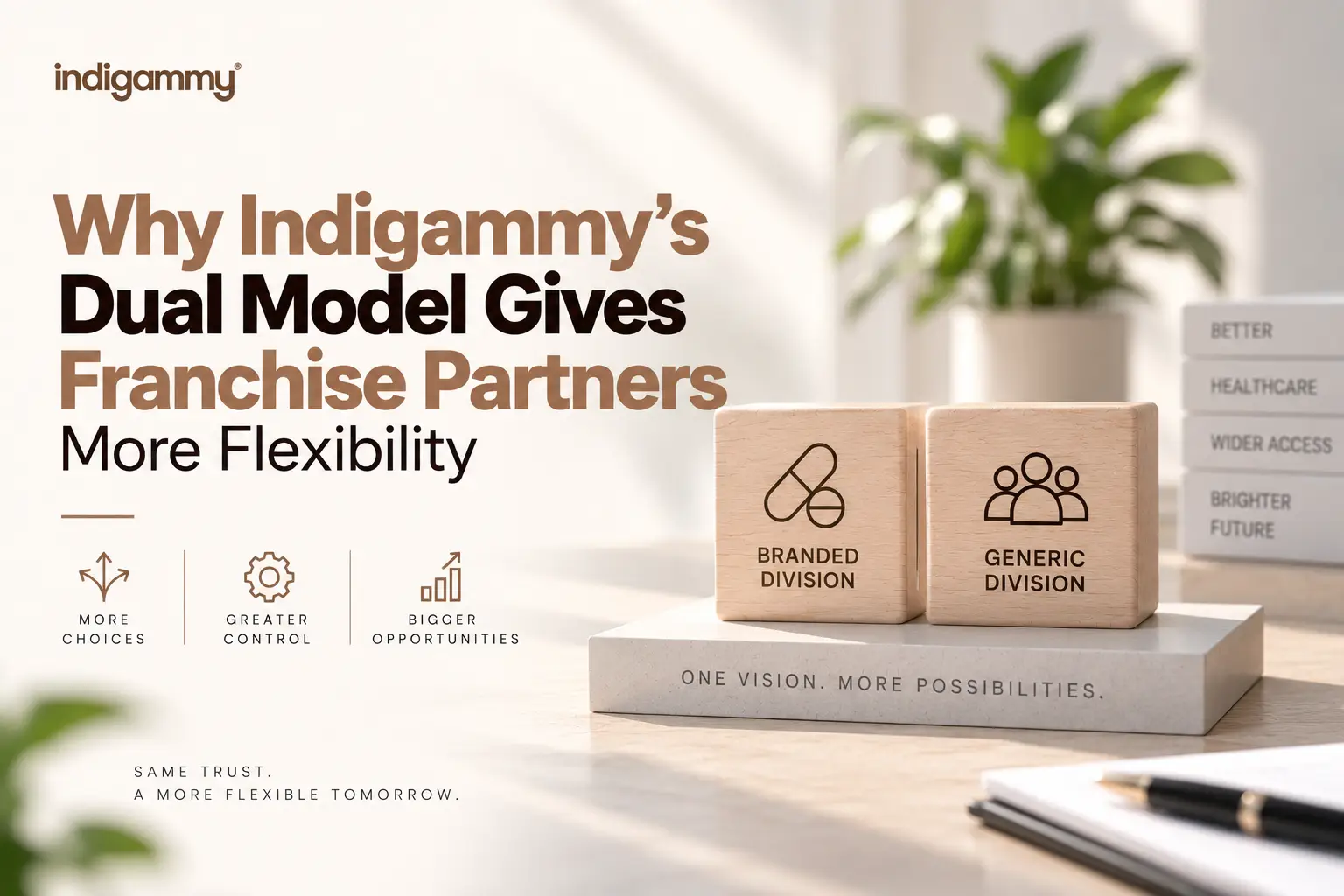
Businesses entering the derma pharma space face a decision most industry content skips past too quickly: whether to represent an established brand or build one of their own. Getting this decision right from the start matters more than most first-time franchise partners realize, since switching models later means rebuilding relationships and processes that took real time to establish.
Indigammy is a derma PCD franchise company in India, and this covers why offering both a franchise model and third party manufacturing under one certified process gives businesses genuine flexibility, rather than forcing a decision before they fully understand their own goals.
Why This Decision Deserves More Thought Than It Usually Gets
Many first-time entrants choose a business model based primarily on whichever option a manufacturer's sales conversation happened to emphasize, rather than genuinely evaluating what fits their own capacity and goals. A franchise partnership suits someone wanting faster market entry with less upfront brand-building. Third party manufacturing suits someone with a clearer long-term vision for owning a distinct brand identity.
What Franchise Representation Actually Offers
Under a derma PCD franchise arrangement, a partner represents Indigammy's established, already-formulated product range within an agreed area. This means immediate access to a real portfolio, existing product literature, and a brand dermatologists may already recognize.
What Third Party Manufacturing Actually Offers Instead
A business choosing third party manufacturing gets formulations produced under its own independent brand label. Indigammy handles formulation, production, and quality testing, while the business builds its own market identity from the ground up.
Why Offering Both Models Under One Certified Process Matters
Some manufacturers only offer one business model, which forces prospective partners into a decision before they have enough information to make it confidently. Indigammy's dual model means a business can start with franchise representation, then transition toward private label manufacturing once their own brand identity becomes a genuine priority.
What This Flexibility Looks Like for a Growing Business
A franchise partner who spends a year building prescriber relationships under an established brand gains real market knowledge, which becomes considerably more valuable once applied to building an independent brand, rather than attempting to learn both the market and brand-building simultaneously from day one.
Why Category Depth Matters Regardless of Which Model You Choose
Indigammy's range spans tablets, capsules, and a full topical dermatology line, alongside cosmetic formulations. This depth matters whether a business is representing this range or requesting formulations manufactured under their own label.
What Certification Means for Both Business Models Equally
WHO-GMP certification applies across Indigammy's entire manufacturing operation, not selectively depending on which business model a partner chooses.
Why Prescriber Relationships Built Under Franchise Representation Translate Later
A dermatologist who trusts an Indigammy franchise partner's product recommendations is trusting the underlying certification and formulation quality. This trust genuinely transfers if that partner later transitions toward their own brand.
What New Entrants Often Get Wrong About This Decision
A common mistake is assuming third party manufacturing is automatically the more ambitious path, while franchise representation is somehow a lesser starting point. Both are legitimate, strategic business decisions.
Why This Dual Model Reduces a Specific, Common Risk
Businesses working with a manufacturer offering only one model face a genuine risk if their goals evolve, having to find an entirely new manufacturing relationship. A manufacturer supporting both models removes this risk entirely.
How to Evaluate Your Own Readiness for Each Path
Assess available working capital, how much time can genuinely be dedicated to relationship building before revenue materializes, and whether owning a distinct brand identity is a near-term priority.
What Existing Franchise Partners Should Know About This Flexibility
For businesses already representing Indigammy's range, this dual model means the option to transition toward private label manufacturing remains available whenever it genuinely makes sense.
Getting Started
Whether the right starting point is franchise representation or private label manufacturing, Indigammy is a derma PCD franchise company in India built to support both paths under one certified process.